Fundamental British Values and our Core School Values
We want our pupils to move from us, confident, curious, articulate, creative, independent and well-prepared for their next stage. We want to produce collaborators, innovators, leaders and, more than anything else, young people who understand what it is to be human.
Aspire, Believe, Achieve

Two of our wonderful pupils in Year 6 have worked together to crochet our very own CEDRIC the Caterpillar.
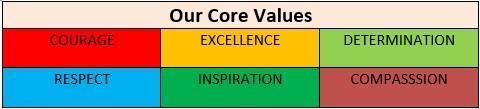
Cedric is a symbol of Tealby School's Values: Courage, Excellence, Determination, Respect, Inspiration and Compassion, so thank you girls for your amazing gift!
At Tealby School, our children will:
Develop the values and skills by which they will live life
Develop a lifelong love of learning
Aspire to be the best they can be
Courage – We are not afraid to try, mistakes help us learn
Excellence – We always do our best to reach high expectations
Determination – We never give up, even when something is difficult
Respect – We appreciate differences and take care of our environment
Inspiration – We use creativity to make learning fun
Compassion – We think of how our actions could affect others
British Values
Promoting Fundamental British Values at Tealby Primary School
In accordance with The Department for Education, we aim to actively promote British values in our school to ensure young people leave school prepared for life in modern Britain. Pupils are encouraged to regard people of all faiths, races and cultures with respect and tolerance and understand that while different people may hold different views about what is ‘right’ and ‘wrong’, all people living in England are subject to its law.
The Key British Values are:
- democracy
- rule of law
- individual liberty
- mutual respect
- tolerance of those of different faiths and beliefs

Democracy – what do we do?
- Class voting for the election of school ambasadors at the start of the year;
- Annual school wide campaign and election for our head boy/girl;
- Provide pupils with a broad general knowledge of, and promote respect for, public institutions and services;
- Teach pupils how they can influence decision-making through the democratic process - class meetings;
- Taught through assemblies and our school curriculum;
- Encourage pupils to become involved in decision-making processes and ensure they are listened to in school;
- Help pupils to express their views;
- Model how perceived injustice can be peacefully challenged through our behaviour policy/ PSHE curriculum ;
- KS2 workshops provided by the Houses of Parliament Education Team
- School Parilament led Debates .
Rule of law – what do we do?
- Ensure school rules and expectations are clear and fair;
- Class rules and celebration of adhering to these rules;
- Help pupils to distinguish right from wrong;
- Help pupils to respect the law and the basis on which it is made;
- Help pupils to understand that living under the rule of law protects individuals;
- Explore within our Personal Development Lessons laws and what to do if peer pressure is trying to persuade children to break these;
- Promote the Rights Respecting School Articles (on policies, around school, in assemblies etc);
- Promote Protected characteristics in Assemblies/PSHE/Curriculum ;
- Workshops from authorities to take about key issues with Years 6.
Individual liberty – what do we do?
- Support pupils to develop their self-knowledge, self-esteem, self-confidence;
- Encourage pupils to take responsibility for their behaviour, as well as knowing their rights;
- Model freedom of speech through pupil participation, while ensuring protection of vulnerable pupils and promoting critical analysis of evidence
- Challenge stereotypes;
- Implement a strong anti-bullying culture;
- E-Safety units of work are taught throughout school and parents and staff receive information regularly on these.
Mutual Respect and tolerance of different cultures and religions– what do we do?
- Use our PSHE lessons and through assemblies to explore the protected characteristics of the 2010 Equality Act to promote respect for individual differences and to actively challenge stereotypes;
- Use our assemblies to explore critical news events (e.g. terrorist attacks, Black Lives Matter etc);
- Explore positive role models (where possible) through our topics who reflect the protected characteristics of the 2010 Equality Act;
- Challenge prejudicial or discriminatory behaviour;
- Organise visits to places of worship
- Years groups explore for Diwali, Eid and Christmas;
- Our RE scheme ensures that our children have a good understanding of a range of religious beliefs and customs;
- Help pupils to acquire an understanding of, and respect for, their own and other cultures and ways of life;
- Use of oracy hand gesture to disagree in a respectful way with the answers of others whilst in class.